
What Is a Haori?
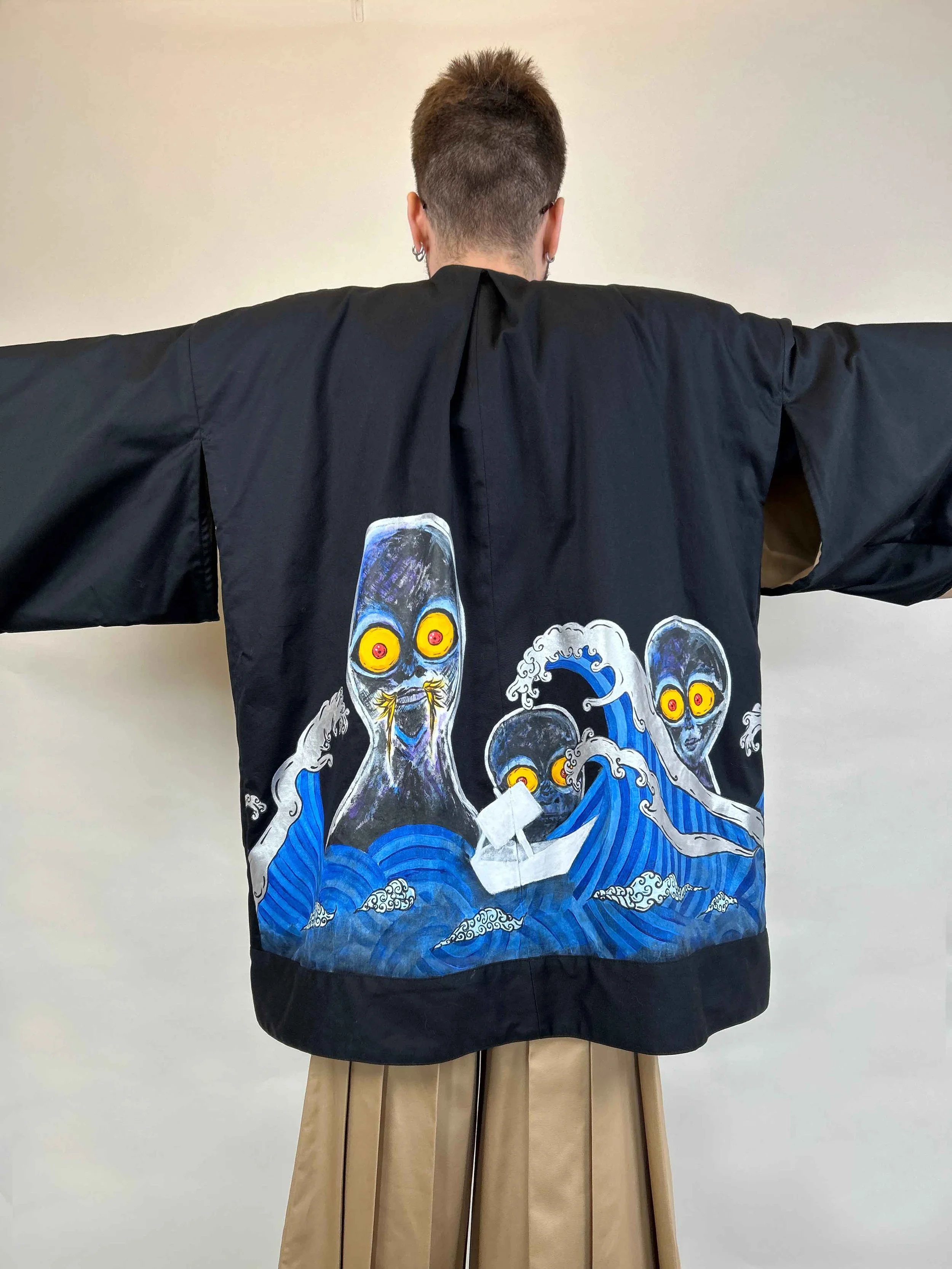
If you've explored our collections, you've probably noticed that many of our garments feature wide sleeves, relaxed silhouettes, and layered designs inspired by traditional Japanese clothing. One of the garments that has influenced our work the most is the Haori.
Elegant, versatile, and timeless, the Haori has been worn in Japan for centuries. While its appearance has evolved over time, its balance of simplicity and functionality continues to inspire designers around the world—including us.
So, what exactly is a Haori, and why has it become such an enduring symbol of Japanese style?
The Origins of the Haori
The Haori (羽織) is a traditional Japanese jacket worn over a kimono. Unlike the kimono, which wraps around the body and is secured with an obi belt, the Haori is designed to be worn open, adding an extra layer of warmth, protection, and style.
Its history dates back to the Sengoku period (1467–1615), when it was first worn by samurai as a practical outer garment over their armor. As time passed, the Haori became increasingly popular among merchants, artists, and eventually the wider population.
Today, it remains an important part of Japanese dress, often worn during formal occasions, festivals, and celebrations, while also serving as a source of inspiration for contemporary fashion.
A Garment Defined by Simplicity
One of the reasons we admire the Haori is its understated elegance.
Rather than relying on complicated tailoring, it achieves its beauty through proportion, movement, and balance. Its straight lines, generous sleeves, and relaxed fit create a silhouette that feels effortless while allowing complete freedom of movement.
It is a perfect example of how simplicity can create something truly timeless.
Even centuries after its creation, the Haori still feels remarkably modern.
Why the Haori Inspires Our Designs
At Akai Ito, we are constantly drawn to garments that combine comfort, versatility, and strong visual identity.
The Haori embodies all of these qualities.
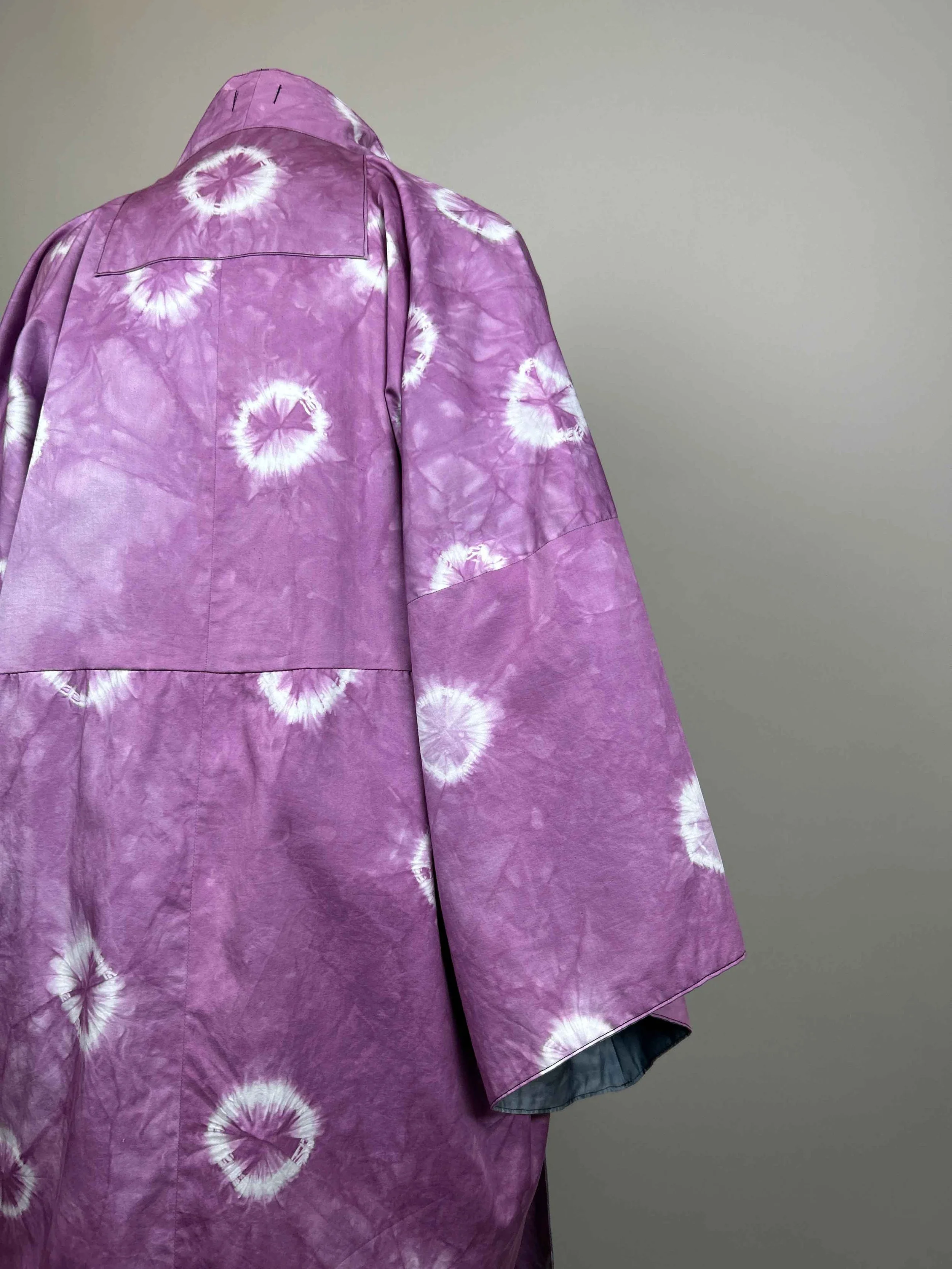
Its oversized silhouette naturally complements our approach to design, allowing us to experiment with layering, draping, and volume while creating garments that feel comfortable and easy to wear.
Rather than reproducing traditional Haori exactly as they have been worn throughout history, we reinterpret their essence through contemporary materials, modern proportions, and the stories that inspire each collection.
The result is clothing that acknowledges its origins while finding its own place in today's wardrobe.
More Than Just a Jacket
The Haori is much more than an outer layer.
In Japanese culture, it has often been used as a canvas for personal expression. Many traditional Haori feature beautifully decorated linings, intricate embroidery, family crests, or hand-painted motifs hidden inside the garment.
We find this idea especially fascinating.
It reminds us that beauty doesn't always have to be immediately visible. Sometimes, the most meaningful details are the ones discovered over time—details that reveal themselves only to the wearer or to those who take a closer look.
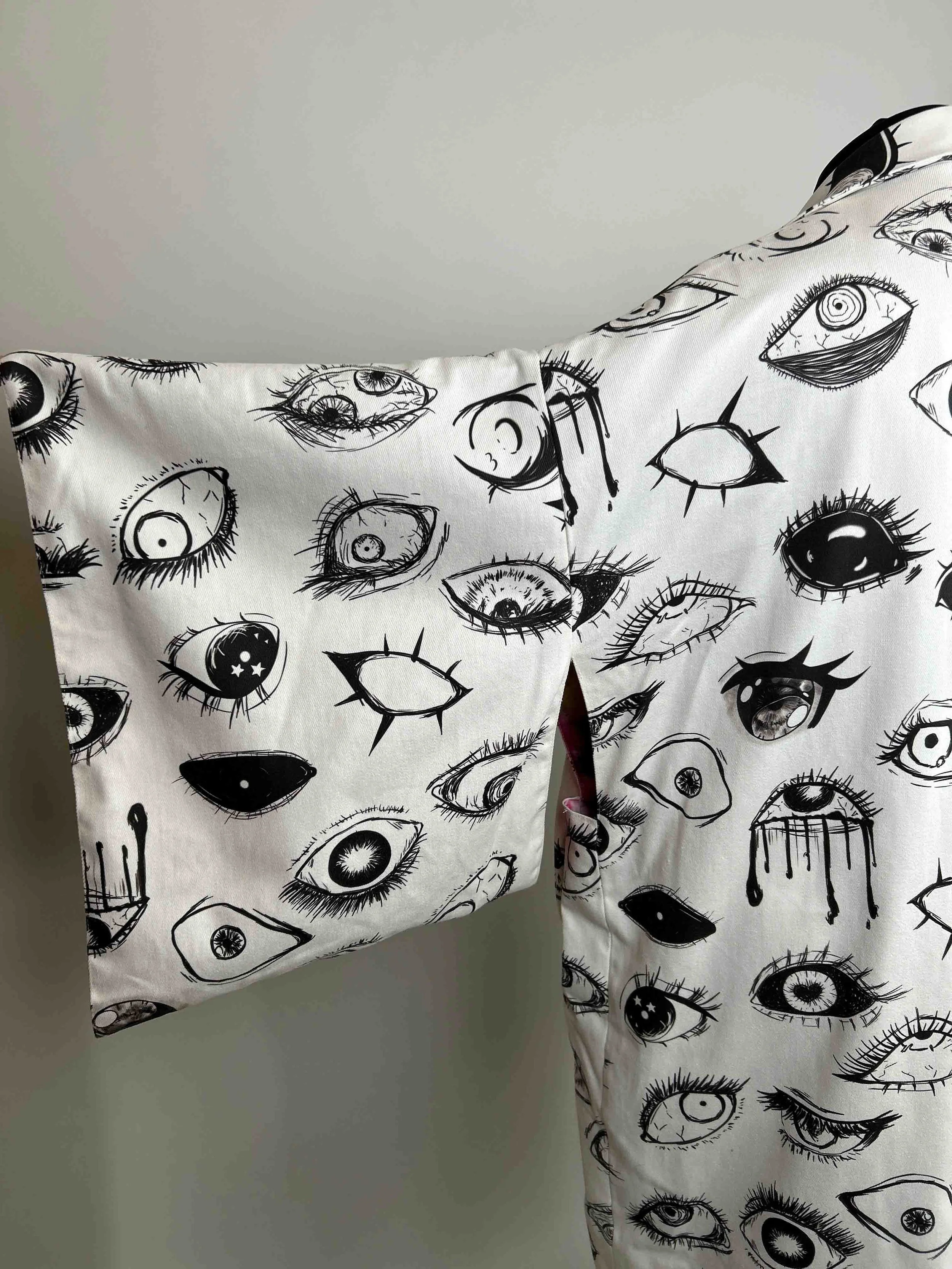
That philosophy resonates deeply with the way we approach our own designs, where illustrations, textures, and subtle references often tell stories beyond what first meets the eye.
Tradition Meets Contemporary Fashion
Fashion constantly evolves, but some garments remain relevant because their design principles are timeless.
The Haori is one of them.
Its relaxed construction, unisex appeal, and versatility have inspired countless designers across the world, proving that traditional clothing can continue to influence modern fashion without losing its cultural significance.
For us, the Haori represents the perfect dialogue between heritage and innovation. It reminds us that inspiration doesn't come from copying the past, but from understanding it, respecting it, and allowing it to evolve into something new.
Why We Keep Returning to the Haori
As designers, we're always searching for garments that tell stories—not only through prints or illustrations, but through their shape, movement, and history.
The Haori continues to inspire us because it does exactly that.
Its silhouette carries centuries of craftsmanship while remaining effortlessly contemporary. It encourages freedom of movement, embraces layering, and demonstrates that simplicity can be incredibly powerful.
Every time we create a Haori-inspired piece, we're not trying to recreate history. We're celebrating it.
By blending traditional Japanese influences with our own contemporary perspective, we hope each garment becomes a bridge between cultures, generations, and stories.
Because for us, that's what fashion is all about: carrying the past forward while creating something entirely new.
